
Software Architecture
When Adding Features Starts Taking Longer
A small change that forces a large regression test is an early sign the architecture is holding growth back.
October 1, 2026 · 3 min read
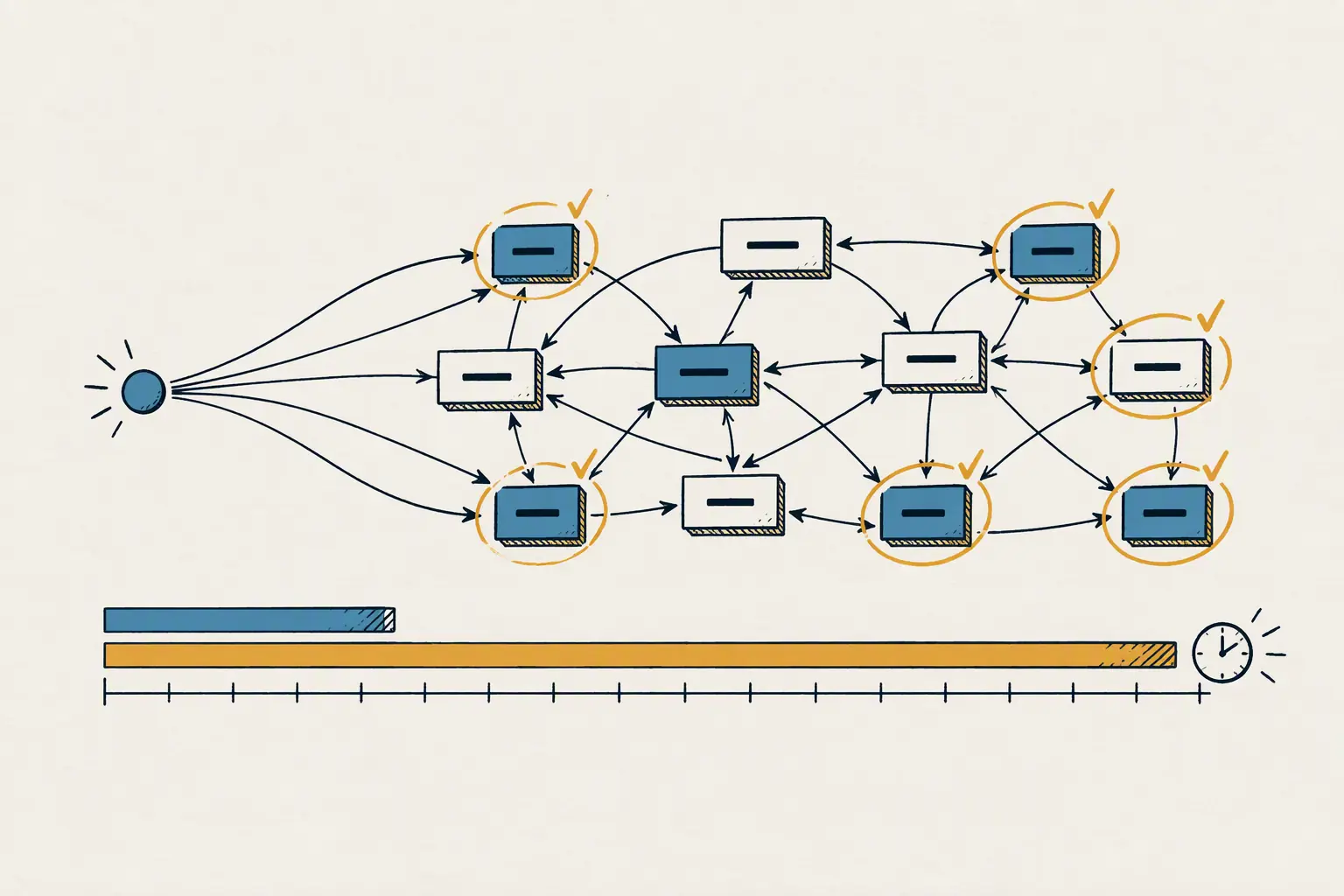
A freshly built system usually feels fast. The first feature lands in days; the second and third requests go just as smoothly. Then the pattern shifts: a request that sounds simple turns out to touch many parts, a small change forces retesting of areas that should be unrelated, and the team starts hesitating before naming an estimate.
At this stage the cause is rarely one bug or one person. It is usually an accumulation of small decisions that each made sense at the time: a module borrowing another module’s tables because it was faster that day, business rules written in three places because no one knew the official home, dependencies between parts that grew without ever being drawn.
The result shows up in speed before it shows up in errors. The system keeps running, nothing breaks, but every new step feels heavier than the last.
Architecture is judged by the cost of change
We look at this situation by measuring the cost of change: how many parts must be touched to deliver one reasonable request. That reveals whether the slowdown comes from one genuinely dense area, or from a structure that makes every area hold the others back.
Signs we usually find together:
- A small change requires testing in areas that sound unrelated.
- The same business rule is written in several places and has started to drift.
- Only one or two people dare to touch a certain part of the system.
- Estimates always carry a buffer no one can explain.
The fix is not always a rebuild. What usually makes the most sense is untangling dependencies bit by bit in the areas that change most often, so the cost of change falls without stopping feature delivery. We consider rebuilding from scratch only when untangling costs more than starting over, and that decision deserves numbers in hand.
If your team is feeling this kind of slowdown, an architecture review usually produces a clear answer: which parts are holding things back, and what order of fixes makes sense for the year ahead.
Related Articles
Cloud & DevOps 3 min read
Releases That Only Happen After Office Hours
As long as going back to the previous version means hunting for a backup folder, every release becomes an event people dread.
Custom Software Development 3 min read
The System Only One Person Can Touch
When one person is the only one who understands it, every change ends up waiting for them to be available.
IT Consulting 3 min read
A Design That Still Holds When the Business Doubles
The first load always feels light. What tests a design is the year the volume has multiplied several times over.
Want to Apply These Ideas to Your Business?
Let’s discuss how this approach can be adapted to your organization’s context.
Start a Conversation